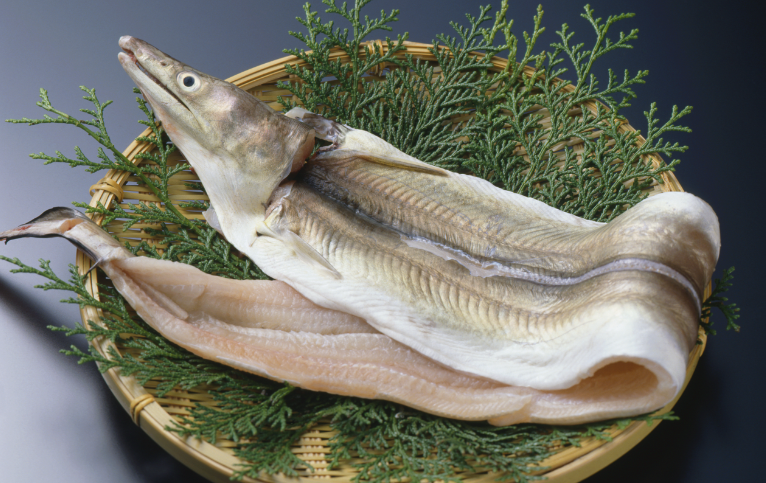
Pike conger, known as "hamo" (鱧) in Japanese, is a type of eel found primarily in the warm coastal waters of Japan. It is especially popular in the Kansai region, particularly in Kyoto, where it is celebrated as a delicacy during the summer months. Hamo is prized for its firm, white flesh and delicate flavor, which makes it a versatile ingredient in Japanese cuisine.
Characteristics
Pike conger can grow up to a meter in length and has a long, slender body. Its flesh is white and firm, with a subtle, sweet flavor that is less oily compared to other eels. The skin is tough, and it contains numerous small, fine bones, which require a specific preparation technique known as "hone-giri" (bone-cutting) to make it easier to eat.
Season
The peak season for hamo is from June to September, coinciding with Japan's hot and humid summer. During this period, hamo is at its best, with a rich flavor and perfect texture that is ideal for various culinary applications.
Use in Japanese Cuisine
Hamo is a staple in traditional Japanese cuisine and is prepared in various ways to highlight its unique qualities:
Hamo no Yubiki (Parboiled Hamo): This is a classic preparation method where the eel is parboiled and then chilled in ice water. It is typically served with plum sauce (umeboshi) or vinegared miso sauce, which complements the eel's delicate flavor.
Hamo Tempura: Hamo can be battered and deep-fried to create a crispy exterior while maintaining a tender interior. This preparation enhances the eel's natural sweetness and provides a delightful contrast in textures.
Hamo Shabu-shabu: In this hot pot dish, thin slices of hamo are briefly cooked in a simmering broth. The quick cooking process preserves the eel's tenderness and allows diners to enjoy its fresh, subtle taste.
Grilled Hamo (Hamoyaki): Grilling hamo brings out its natural flavors and adds a smoky aroma. It is often served with a simple soy-based sauce or seasoned with salt.
Cultural Significance
In Kyoto, hamo is more than just a dish; it is a symbol of summer and is integral to many traditional festivals and events. The delicate and refined nature of hamo dishes aligns with Kyoto's culinary ethos, which emphasizes subtlety and elegance.
Due to its challenging preparation and exquisite taste, hamo is considered a luxury ingredient in Japanese cuisine. Its unique flavor and texture make it a cherished delicacy that continues to be a highlight of summer dining in Japan.